×

Exciting changes ahead!

Focus Eye Care is happy to announce the addition of Dr. Justin Schulte and Dr. Keaton Cornish to the practice starting in April 2026. We are experiencing higher than normal call volumes at the moment so please be patient with us. IF YOU ARE A NEW TO THE ONLINE SCHEDULING YOU WILL NEED TO TEXT/EMAIL US YOUR NAME AND EMAIL ADDRESS FIRST BEFORE USING THE ONLINE APPOINTMENT BOOK. WE WILL THEN ALLOW YOU ACCESS. THANK YOU AND WE APOLOGIZE FOR THE INCONVENIENCE.

Schedule an Appointment Online
Close

Would you like to switch to the accessible version of this site?

Go to accessible site Close modal window

Don't need the accessible version of this site?

Hide the accessibility button Close modal window
Accessibility View Close toolbar

Focus Eye Care

M: 9am-1pm T: 11am-7pm W/Th: 8am-5pm F: 8am-3pm 
Sat/Sun: Closed


Menu
  • Home
  • New Patient Center
    • Online Forms
    • Insurance & Payments
  • About Us
    • Meet the Optometrists
    • Meet the Staff
  • Eyecare Services
    • Contact Lens Exams
    • Eye & Vision Exams
    • Eye Surgery
    • Hard To Fit Contacts
    • Ortho-K
    • Computer Vision Treatment
    • Sunglasses
  • Frames
  • Blog
  • Community Content
  • Contact Us
    • Appointment Request
  • Spread the Love Nomination
  • Home >
  • Articles >
  • Eye Diseases >
  • Stargardt Disease

Stargardt Disease

  • Created in Eye Diseases

Stargardt Disease

Loss of eyesight and macular degeneration are typically associated with aging. Stargardt disease, however, an inherited form of macular degeneration, commonly affects children and young adults. Also referred to as Stargardt macular dystrophy (SMD) or flavimaculatus, the term Stargardt disease refers in particular to the form of inherited macular degeneration which affects individuals at a young age.

Cause

The death of photoreceptor cells located in the center of the retina (back of the eye) causes Stargardt disease. The photoreceptor cells of the macula, the center of the retina where light comes to a sharp point, are responsible for central vision. Central vision is used for activities like facial recognition, reading, watching television, and driving. Stargardt disease does not typically affect peripheral vision or motion-detecting vision.

Symptoms

A progressive loss of central vision is the primary symptom of Stargardt disease, in addition to difficulty seeing in low light and the eventual loss of color vision at late stages of the disease. The visual acuity of sufferers can deteriorate to vision as bad as 20/40 to 20/400.

Risk Factors

An inherited condition, Stargardt disease is passed on to a child via two parents carrying the recessive gene, where each parent has a recessive Stargardt gene paired with a normal gene. Children of two carriers have a 25 percent chance of inheriting two Stargardt genes linked together, and therefore inheriting the disease.

Research has identified the recessive gene associated with Stargardt disease, ABCA4, and individuals can be tested to find out if they are carriers. Couples who are both carriers of the Stargardt disease recessive gene can seek genetic counseling prior to having children to learn about the risks associated with the disease.

Diagnosis and Treatment

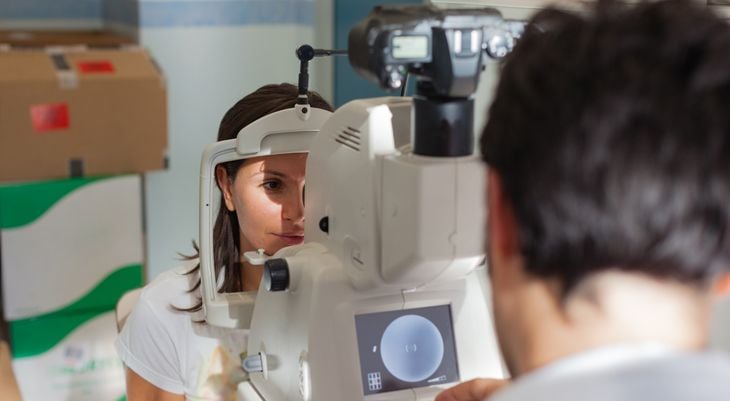
An eye care professional uses a slit lamp to diagnose Stargardt disease by observing the presence of yellow deposits of lipofuscin (a type of fat), which accumulate abnormally, and the presence of vitamin A dimers (clumps) in the retina.

Exposure to UV light has been shown to accelerate the disease's progress. Anyone diagnosed with Stargardt disease should always wear sunglasses with 100% UV protection.

  • Common Eye Conditions
    • Age-Related
    • Cognitive and Acquired
    • Vision Impairment
    • Injury & Irritation
    • Eye Lids
    • Changes in Appearance
  • Contact Lenses
  • Eye Diseases
  • Eyeglasses
    • Eyeglass Lenses
  • Eye Symptoms
  • How the Eyes Work
    • Basic Visual Skills
  • Pediatric Vision
  • Protecting Your Eyes
  • Visual Rehabilitation
  • Vision Problems
  • What is Vision Therapy
  • Vision Therapy Programs
  • We Can Help With
    • Cataracts
    • Corneal Disorders
      • Disorders
    • Glaucoma
    • Refractive Disorders
    • Adult Strabismus
    • Retinal Disorders
  • Newsletters
    • Glasses & Frames
    • Contacts
    • Tips for Healthy Eyes
    • Conditions That Affect Vision
    • Kid's Vision
    • Amazing, Interesting Eyes
    • Medical Perspectives

Contact Us for Availability!

Same day appointments available! Call to schedule.

Error!

    Office Hours

    Same day available!

    Waukee Office - Call for same day appointments!

    Monday:

    9:00 am-1:00 pm

    Tuesday:

    11:00 am-7:00 pm

    Wednesday:

    8:00 am-5:00 pm

    Thursday:

    8:00 am-5:00 pm

    Friday:

    8:00 am-3:00 pm

    Saturday:

    Closed

    Sunday:

    Closed

    We are located at the corner of University and SE Alices Road

    Call us at (515) 264-2445 to schedule your comprehensive eye appointment!

    Contact Us
    • Copyright © 2026 MH Sub I, LLC dba iMatrix.
    • Admin Log In
    • ACA Notices